
Validation of Skin Elasticity Measurement Method Using Indentation-based Piezoelectric Sensors
ⓒ The Korean Sensors Society
This is an Open Access article distributed under the terms of the Creative Commons Attribution Non-Commercial License(https://creativecommons.org/licenses/by-nc/3.0/) which permits unrestricted non-commercial use, distribution, and reproduction in any medium, provided the original work is properly cited.
Abstract
In this paper, we propose and develop a new skin elasticity measurement method and device using indentation based on piezoelectric sensors. The proposed method is designed to minimize uncertainty caused by the multilayer structure of the skin when measuring its elasticity. In addition, we developed a piezoelectric-based thin-film pressure sensor that can perform quick and quantitative measurements during repeated use. To confirm the effectiveness of the proposed measuring method, it was compared with the experimental results of the conventional measuring devices under the same experimental conditions. A statistical correlation analysis was then performed between the experimental data from the proposed device and that from the conventional devices. As a result, it was confirmed that the proposed measuring device showed a high correlation with the Cutometer® and Dermaflex® devices, with correlation coefficients of 0.891 and 0.810 (p < 0.001), respectively. Therefore, the proposed skin elasticity measuring device was found to be effective. Due to its accuracy and convenience, it is expected to be useful in diagnosis and product development related to skin elasticity.
Keywords:
Skin eleasticity, Indentation sensor, Piezoelectric sensor, Skin clinical test equipment1. INTRODUCTION
With the ongoing shift toward an aging population and improvements in living standards, interest in skin aesthetics has grown considerably. Among the various aspects of skin appearance, wrinkles are the most immediately noticeable. Most people desire clear, wrinkle-free, and elastic skin that looks healthy. Although significant research and development efforts are underway for functional skincare products, beauty devices, and medical equipment aimed at mitigating skin aging, studies focused on measurement devices that objectively verify the effectiveness of these interventions remain limited. Wrinkles and elasticity—two key skin characteristics—are largely determined by the skin’s mechanical properties. Consequently, understanding skin tissue mechanics is critical in fields such as medicine, cosmetics, and medical device development [1,2]. Clinically, soft tissue integrity is often assessed through visual inspection and manual palpation; however, these evaluations are highly subjective and vary depending on the examiner’s experience [3-5]. The skin’s complex layered structure, composed of a porous solid matrix and interstitial fluid, exhibits anisotropic, heterogeneous, and viscoelastic properties [6]. Given this complexity, skin elasticity should be quantified through objective, reliable measurements rather than subjective assessments. Common methods to measure skin elasticity include static or dynamic indentation to evaluate softness or viscoelasticity [1,7], suction-based techniques that mechanically stretch the skin [6,8], and imaging methods such as ultrasound [9]. Currently, the most widely used technique in clinical settings for measuring the mechanical properties of the skin is the suction method, with representative devices including the Cutometer® and Dermaflex®. Suction-based devices are valued for their high reproducibility, as they provide various parameters related to skin properties such as elasticity and viscoelasticity. However, Diridollou et al. reported that suction-based measurements are influenced more by subcutaneous fat tissue than by the dermis itself [10]. Additionally, during repeated measurements, these devices may exhibit hysteresis effects because the skin takes longer to return to its original position with an increasing number of measurement cycles [11,12]. Moreover, most conventional measuring devices—including those employing suction methods—feature complex electromechanical designs that can cause practical inconveniences depending on the usage environment. They also present challenges when performing repeated measurements on specific skin areas, making them less suitable for time-sensitive clinical settings and portable applications.
In this study, we developed an indentation-based skin elasticity measurement device designed to minimize uncertainty arising from the skin’s layered structure. To this end, we engineered a mechanical component optimized to account for the effects of dermal thickness and subcutaneous fat tissue. Furthermore, we developed and integrated a thin-film pressure sensor based on the piezoelectric principle, enabling rapid and quantitative repeated measurements at the same skin location. The piezoelectric sensor demonstrated linear output characteristics within the skin elasticity measurement range when tested using a digital force gauge. To validate the reliability of the proposed device, comparative experiments were conducted with clinically approved reference devices, followed by statistical correlation analysis. The results confirmed the performance and effectiveness of the proposed system for measuring skin elasticity.
2. METHODS
2.1 Method for Measuring Skin Elasticity Considering Viscoelastic Response
Human skin exhibits viscoelasticity, which leads to nonlinear behavior over time when a constant stress is applied. This behavior is governed by a phenomenon known as creep, where the deformation of a material increases with time under sustained stress. When measuring the total strain of a viscoelastic material, the creep strain must be accounted for in addition to the instantaneous elastic strain at the time of measurement. Moreover, the rate at which stress is applied significantly affects the final total strain in materials such as skin. If stress increases rapidly to a certain level, the resulting total strain is considerably lower than that produced by a slower application of stress. Under constant strain conditions, viscoelastic materials exhibit stress relaxation, where the stress in the specimen decreases over time. Due to the nonlinear nature of viscoelastic materials, it is essential to use a high sampling rate when acquiring stress–strain data. Such data typically include components such as initial linear elastic strain, creep strain, elastic strain recovery, and creep strain recovery [13,14].
A widely used technique for measuring skin elasticity involves suction pressure technology, which exploits the skin’s viscoelastic properties. In this method, partial negative pressure is applied to the skin, causing it to be drawn into a probe. The probe typically consists of a light source, a photodetector, and two opposing prisms. Light emitted from the source passes through the skin and is received by the photodetector; changes in light transmission correspond to the degree of skin deformation under suction. This setup allows for precise measurement of the skin’s resistance to deformation as well as its ability to recover its original shape.
When employing a Cutometer® to assess skin elasticity, a vacuum of 400 mbar is applied for 10 seconds, followed by a 5-second relaxation period during which the dynamic deformation of the skin is recorded. The collected data are expressed through several parameters, as illustrated in Fig. 1: Ue, Uv, Ur, Uf, Uv/Ue, and Ur/Uf. These parameters represent the following [15]:
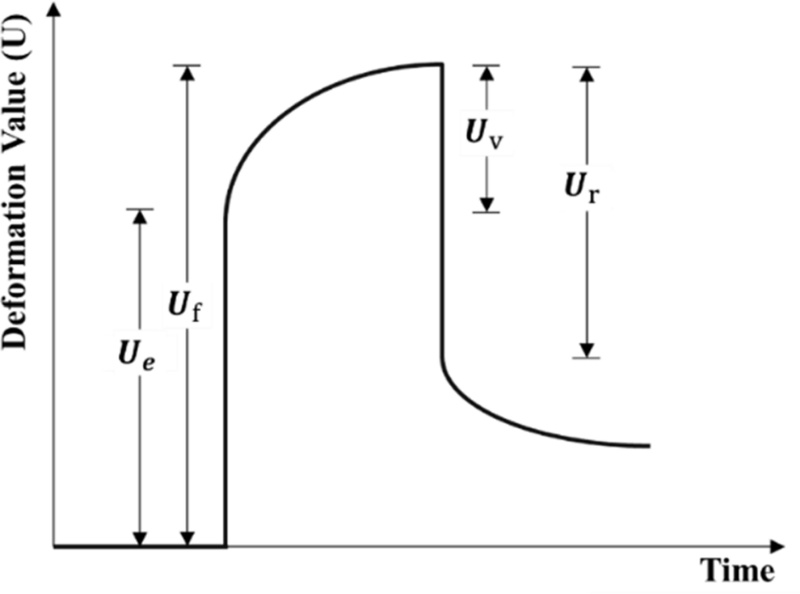
Cutometer vairables
- · Ue (Immediate Distension): The initial rapid deformation of the skin caused by suction, representing the elastic response.
- · Uv (Delayed Distension): Additional deformation arising from the skin’s viscoelastic behavior over time.
- · Ur (Immediate Retraction): The prompt return of the skin to its original position following release of suction.
- · Uf (Final Distension): The total skin deformation, calculated as the sum of Ue and Uv, indicating the skin’s maximum extensibility.
- · Uv/Ue: A viscoelastic ratio that quantifies the fluid-like displacement characteristics of the skin.Ur/Uf: Elasticity ratio that represents the skin’s ability to return to its initial state after deformation and serves as a key indicator of skin elasticity.
Although the resistance to suction stress is primarily attributed to the dermis, the subcutaneous fat layer is subjected to greater pressure than the dermis, making it difficult to evaluate the relative contribution of each layer. In other words, while the skin at rest responds linearly to low stress levels, as the magnitudes of stress and deformation increase, the intrinsic elasticity of the dermis contributes significantly to stress resistance, resulting in a nonlinear response.
2.2 Instantaneous Skin Elasticity Meaasurment Method
The skin elasticity measurement method proposed in this study focused on evaluating the Instant Skin Elasticity (ISE). By briefly pressing the probe located at the end of the device onto the skin five times in rapid succession, the resistance or restorative force of the skin generates an electrical output signal through the sensor. This electrical signal, derived from the output characteristics of the piezoelectric sensor, enables estimation of the elastic force of the skin. Accordingly, a higher output signal from the piezoelectric sensor indicated greater skin elasticity.
The mechanical response applied to the force transducer of the measurement device by the restorative force of the skin can be expressed through a mechanical analysis using the following Eq (1):
| (1) |
The sensor output Vout represents the elasticity of the skin, where Fs denotes the force generated by the viscoelastic properties of the skin, and Fk represents the elastic restoring force of the spring. The measured output force FVout (i.e., Vout) can be converted into a force value (N) based on the signal characteristics of the piezoelectric sensor. As illustrated in Fig. 2, when the measurement device was applied to the skin, the displacement x of the probe remained constant, indicating that the compression length of the spring was also fixed. Therefore, because the displacement x was constant, the spring force Fk remained constant, confirming that the elastic component of the spring did not vary during the measurement.
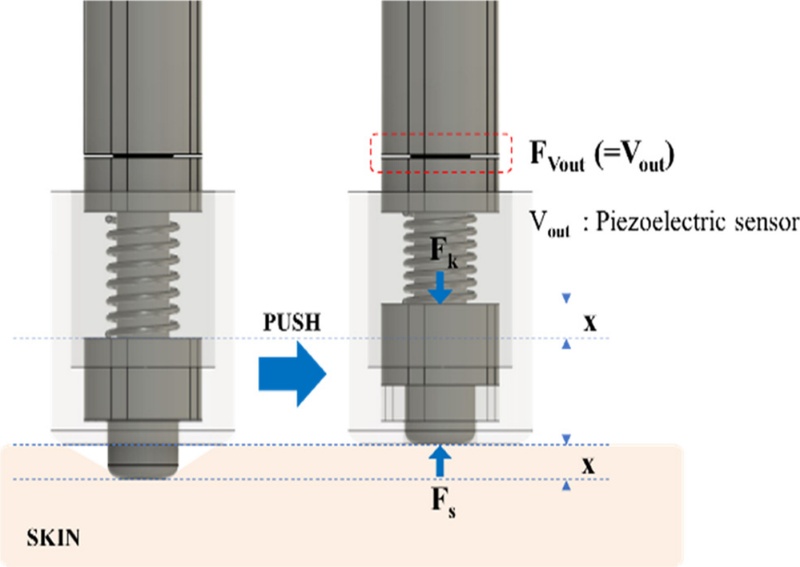
Principle of the developed indentation-based measurement device
3. IMPLEMENTATION OF SKIN ELASTICITY MEASUREMENT DEVICE
3.1 Fabrication of the Piezoelectric Sensor
Piezoelectric sensors operate based on the piezoelectric effect, whereby mechanical vibrations are converted into electrical signals, and vice versa. Beyond this bidirectional functionality, piezoelectric sensors can transform physical quantities such as pressure, acceleration, and strain into electrical signals. The sensor developed in this study features a five-layer multilayer structure and utilizes a thin-film PVDF (polyvinylidene fluoride) element to achieve piezoelectric sensing. The outer coating layer consists of a flexible plastic material that serves as an insulating layer. When external pressure is applied to the PVDF thin film, electric charges are generated within the PVDF layer due to the piezoelectric effect, creating a potential difference. This potential is collected and converted into an electrical signal via silver electrodes specifically designed for this purpose. The fabricated sensor is constructed with a multilayer structure based on a PVDF thin film approximately 100 μm thick. Both sides of the PVDF layer are coated with 20 μm-thick aluminum electrodes, and additional conductive silver ink electrodes, approximately 5–10 μm thick, are printed using screen printing technology. As shown in Fig. 3, the PVDF thin film has a diameter of 3 mm and a thickness of about 100 μm. The overall dimensions of the flexible piezoelectric sensor are 4 mm in width and 6.8 mm in length, as illustrated in Fig. 4.
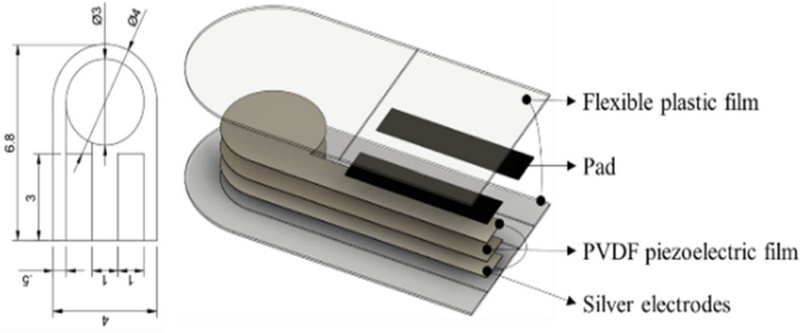
Dimensions and construction of the Piezoelectric sensor
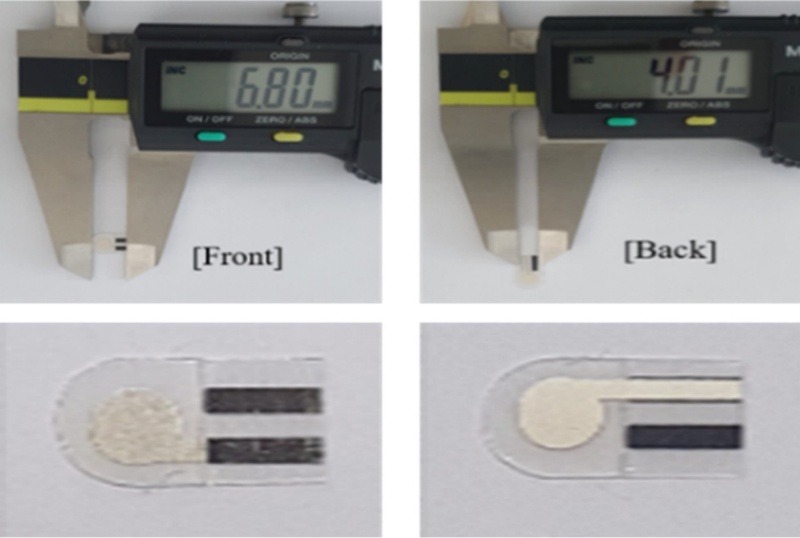
Measured dimensions of the developed Piezoelectric sensor
3.2 Signal Characterization of the Fabricated Piezoelectric Sensor
As shown in Fig. 5, the sensor was mounted on a digital force testing jig (Sundoo Co., Ltd.), and a force gauge was used to apply a vertical load ranging from 0 N to 70 N. To evaluate the sensor’s output voltage characteristics in response to applied force, it was connected to an Agilent E4980A precision LCR meter, which was interfaced with a PC via USB. The output data were then analyzed using Matlab®. The results are presented in Fig. 6. Typically, when a skin measurement device contacts the skin, the applied force ranges from 5 to 60 N, while the restorative force generated by the skin’s viscoelastic properties usually falls between 1 and 10 N. In this experiment, the sensor’s output characteristics were evaluated under applied forces from 0 N to 70 N to fully assess its response within and beyond the typical operating range. For the force range of 0–10 N, forces were applied in 1 N increments, while in the range of 10–70 N, increments of 5 N were used. Within the 0–10 N range, the sensor exhibited a mean error within ±0.21 V and demonstrated a linear increase in output corresponding to the applied force. In the higher force range (10–70 N), the mean error remained within ±0.10 V. However, from 60 N onward, the sensor's output began to deviate from linearity, showing a noticeable decline in sensitivity, indicating a nonlinear responseat higher force levels.
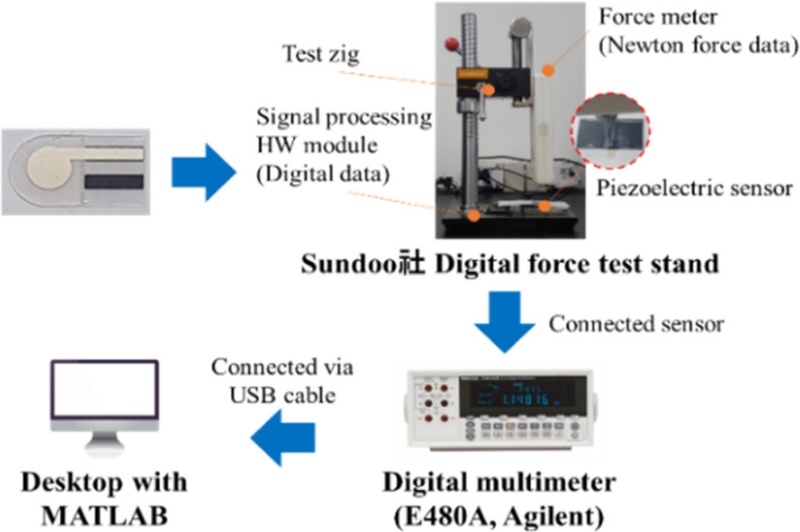
Experimental environment for testing the developed Piezo-electric sensor
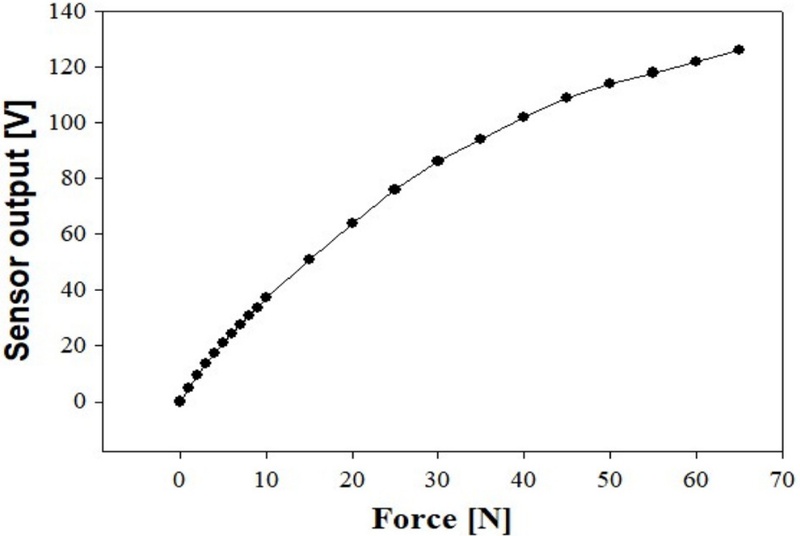
Output characteristics of the developed Piezoelectric sensor
3.3 Implementation of the Skin Elasticity Measurement Device
As shown in Fig. 7, the measurement device consists of a plate cover that contacts the skin, a probe, a spring to transmit the skin’s viscoelastic force, a force transducer, and a thin-film pressure sensor based on the piezoelectric principle. To transfer the skin’s restorative force as a mechanical response to the embedded piezoelectric sensor, the mechanical structure was fabricated using the following components: a spring made of spring steel with a spring constant of 0.1, having a diameter of 5.8 mm, length of 10 mm, and wire thickness of 0.5 mm and a force transducer with a length of 15 mm. A support rod with a diameter of 10 mm, a rod cover with a diameter of 11 mm and a plate cover with a diameter of 12 mm. The measurement method involved bringing the probe and plate cover into contact with the skin, then vertically indenting the probe into the skin. As the probe presses into the skin, the skin’s viscoelastic properties cause the spring to compress. This compression transmits the skin’s restorative force as an elastic force through the spring to the force transducer. The applied force is then conveyed to the embedded piezoelectric sensor, which converts the mechanical pressure into a corresponding electrical output signal. The electrical signal generated by the sensor ultimately reflects the skin’s restorative force, enabling the collection of quantitative data corresponding to its elastic response. To support this, an external signal-processing module was developed to acquire and process the piezoelectric sensor’s output. This module also featured an interface circuit for USB-based data communication. A custom-printed circuit board (PCB) was fabricated to house the signal processing components. The module includes an amplifier, an analog filter, and an analog-to-digital converter (ADC) that digitizes the sensor’s analog output with a 10-bit resolution. For digital signal processing and data communication, the system integrates an ARM Cortex-M0 microcontroller (MCU) operating at 16 MHz. To facilitate data acquisition and analysis on a PC, the module supports communication via USB using an I²C interface.
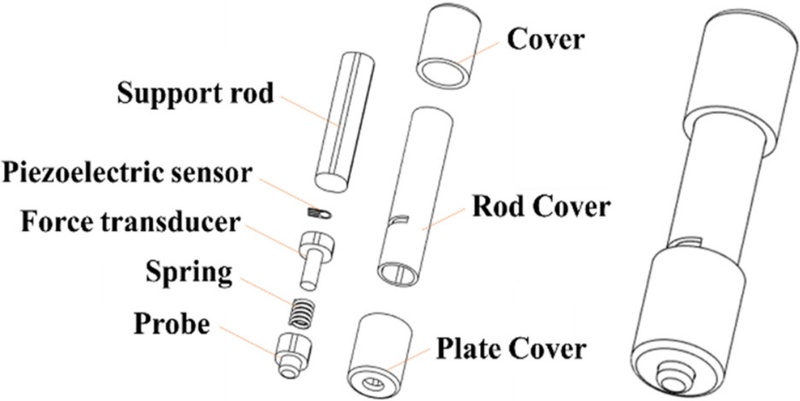
Enlarged view and design modeling of the developed measuring device
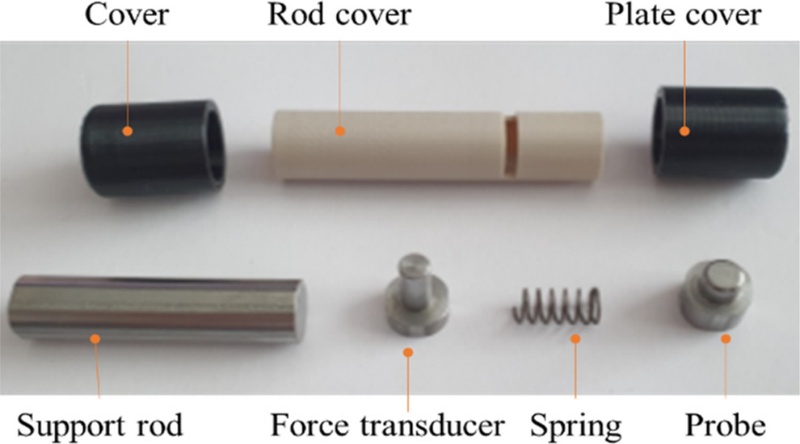
Components of the developed measuring device
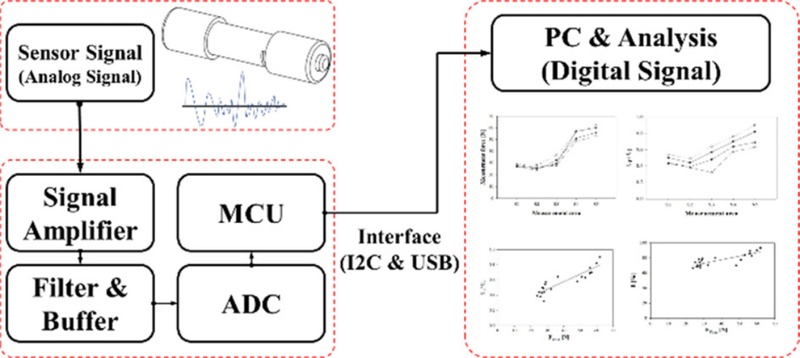
Block diagram of the developed measuring device
4. EXPERIMENTAL SETUP
As shown in Fig. 10, the experimental setup included the developed measurement device along with two commercial reference devices: the Cutometer® (Courage + Khazaka, Germany) and the Dermaflex® (Cortex Technology, Denmark). Four healthy male participants in their 30s, with no history of skin disease and similar skin hydration levels, were recruited for the study. The study’s objectives and procedures were explained in advance, and written informed consent was obtained from all participants. Skin elasticity measurements were performed at five different body sites on each individual.
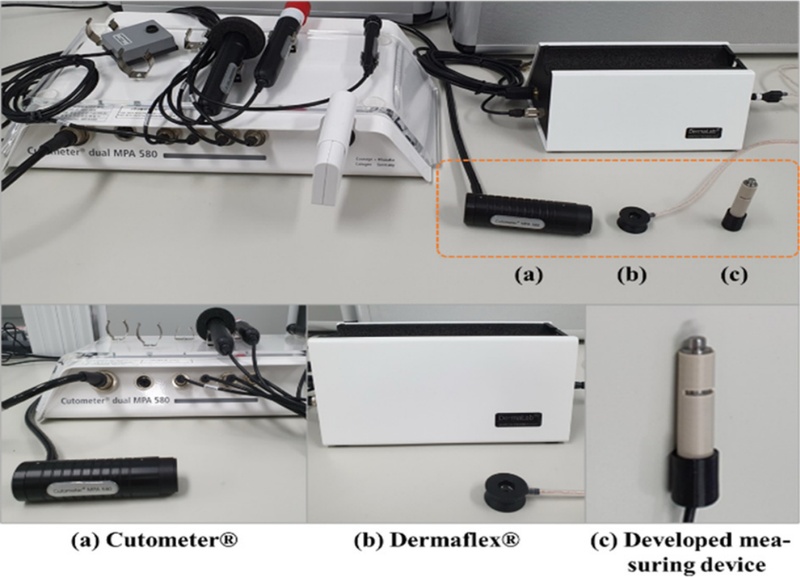
Experimental skin measurement device
The measurement sites, illustrated in Fig. 11, included regions on the face (S1, S2), neck (S3), and arm (S4, S5), and were defined as follows:
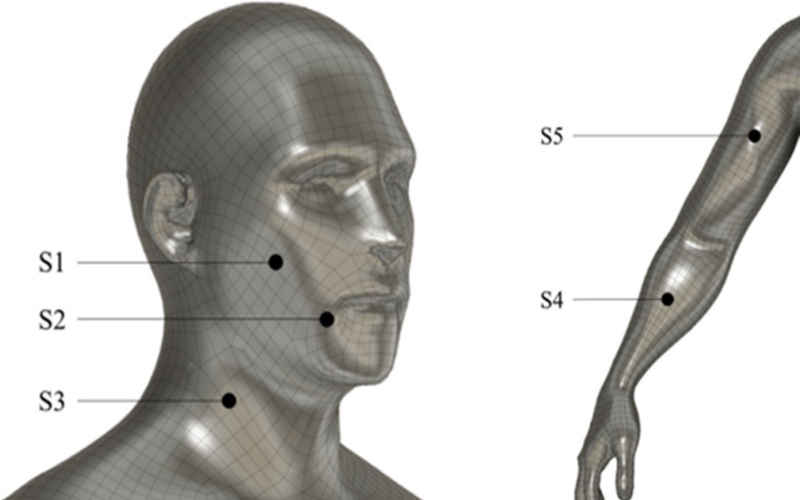
Measurement regions on the face, neck, and arm
- · S1: Midpoint of the masseter muscle
- · S2: Midpoint of the platysma muscle near the corner of the mouth
- · S3: Neck region, approximately 10 cm below S2
- · S4: Midpoint of the flexor surface of the forearm
- · S5: Midpoint of the flexor surface of the upper arm
The measurement device was operated using the developed signal processing module in conjunction with a digital multimeter for control and data acquisition. Data were sampled at a frequency of 1000 Hz. During each measurement session, the device was held perpendicular to the skin surface, and five repeated measurements, each lasting 5 seconds, were taken at each site. total measurement time per subject was under 2 minutes. The average of the five trials was then computed and analyzed using MATLAB®.
5. RESULTS
5.1 Experimental Results of the Implemented Elasticity Measurement Device
Fig. 12 presents the Instant Skin Elasticity (ISE) values measured at each anatomical site. The mean ISE values for the facial regions (S1, S2) and the neck (S3) were 27.75 N, 35.75 N, and 31.55 N, respectively, indicating relatively minor variations in elasticity among these areas. In contrast, the arm regions (S4, S5) exhibited significantly higher mean values of 53.10 N and 57.78 N, respectively. These results suggest that the skin on the arms has notably greater elasticity compared to that of the face and neck. No statistically significant differences were found between participants or other body sites, except for the observed trend of skin elasticity slightly decreasing from the proximal to distal areas of the body.
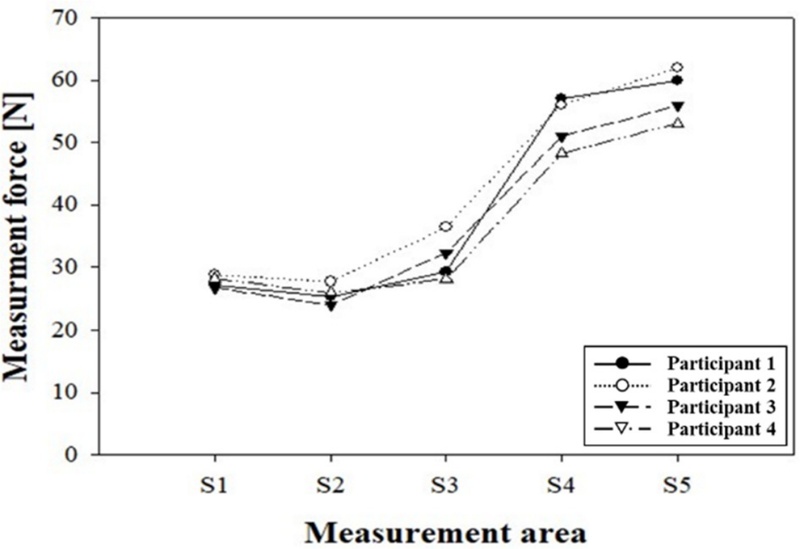
Measurement results of skin elasticity according to subject and region using the developed measuring device
5.2 Experimental Results of Commercial Elasticity Measurement Devices
The Cutometer® provides several key parameters for assessing skin elasticity, including Ue, Uv, Uf, and Ur, as shown in Fig. 1. Specifically, Ue represents the immediate distension of the skin upon the application of suction. Uv reflects the additional deformation attributed to the skin’s viscoelastic properties. Uf denotes the total deformation, calculated as the sum of Ue and Uv. Ur indicates the skin’s ability to return to its original shape after the suction is released. A commonly used elasticity index derived from these measurements is Ur/Uf, which quantifies the skin's elastic recovery and is illustrated in Fig. 13.
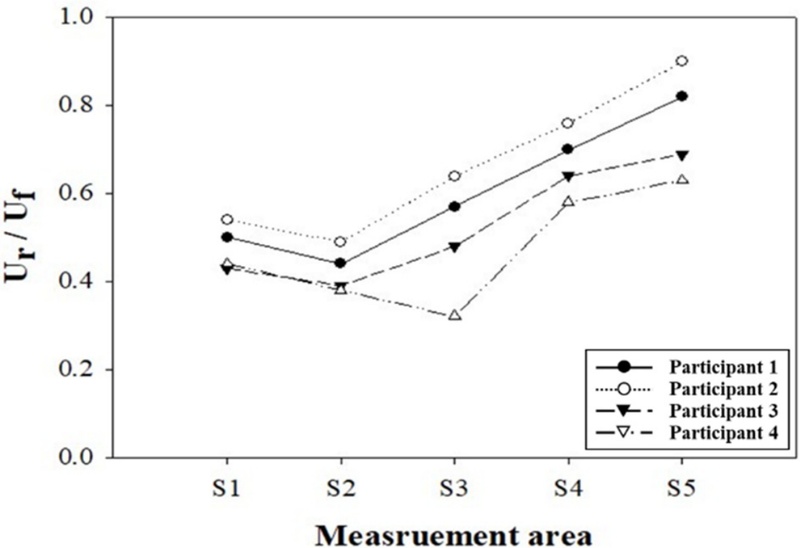
Measurement results of skin elasticity according to subject and region using Cutometer®
Dermaflex® device provides two main parameters: TD, which represents the degree of extension, and H, which corresponds to hysteresis. As shown in Fig. 14, the primary elasticity-related metric derived from these parameters is E, which was used for comparative analysis.
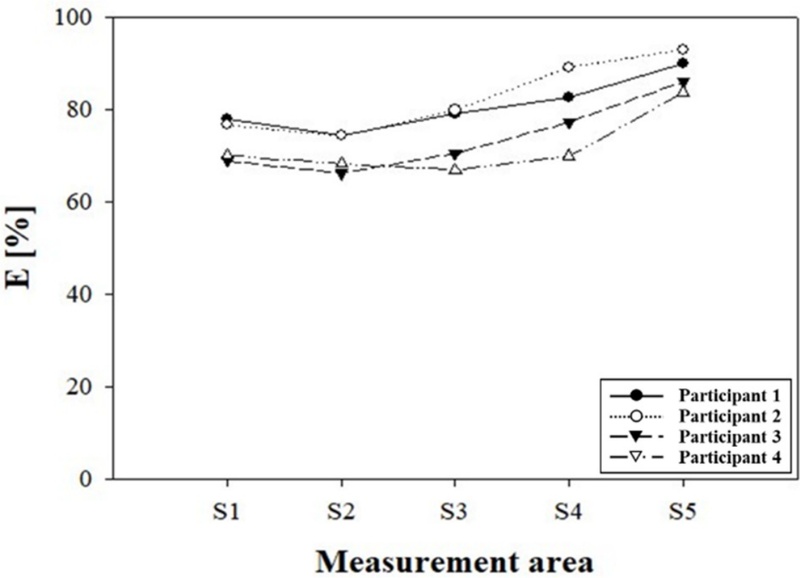
Measurement results of skin elasticity according to subject and region using Dermarflex®
Measurements with both the Cutometer® and Dermaflex® were performed on each participant for 15 seconds per trial, repeated five times. The total measurement time per subject was approximately 1–2 minutes. The average of the five trials at each measurement site was calculated and analyzed using MATLAB®.
As shown in Fig. 13, analysis of the Cutometer® data revealed that the S2 site (facial region) exhibited a higher Ur/Uf ratio than S1, indicating a noticeable variation in skin elasticity within the face. Although no statistically significant differences were found among participants at the neck (S3) and arm sites (S4, S5), the average values at S4 and S5 were 0.67 and 0.76, respectively—demonstrating substantially higher elasticity in the arm regions compared to the face and neck. Unlike the results obtained with the Cutometer® and the developed device, the forearm site (S4) did not exhibit a notable increase in skin elasticity. However, the upper arm site (S5) showed significantly higher elasticity values compared to other regions. When comparing the outcomes across the developed device, the Cutometer®, and the Dermaflex®, no statistically significant differences were observed among the subjects or between the devices. Nevertheless, a consistent trend emerged: skin elasticity tended to decrease slightly from proximal to distal body sites.
As noted by Gniadecka et al. [16], the mechanical properties of the skin are affected by a range of factors, including age, sex, anatomical location, endocrine status, systemic diseases, hydration levels, and gravitational forces. The observed decrease in elasticity from proximal to distal regions may be attributed to the increased mechanical stiffness needed to counteract gravitational forces. Additionally, the comparatively lower elasticity in facial regions may be explained by chronic photoexposure and its associated degradation of skin structure over time.
5.3 Comparison of Measurement Results
To assess the reliability of the developed skin elasticity measurement device, a Spearman’s correlation analysis was performed using MATLAB® to compare its results with those from two clinically validated commercial systems: the Cutometer ® (Courage+Khazaka, Germany) and the Dermaflex® (Cortex Technology, Denmark).
As shown in Figs. 15 and 16, the correlation between the developed device and the commercial systems—Cutometer® and Dermaflex®—was analyzed based on skin elasticity measurements taken from five anatomical sites across four participants. The analysis evaluated the degree of association between the newly developed system and established clinical devices.
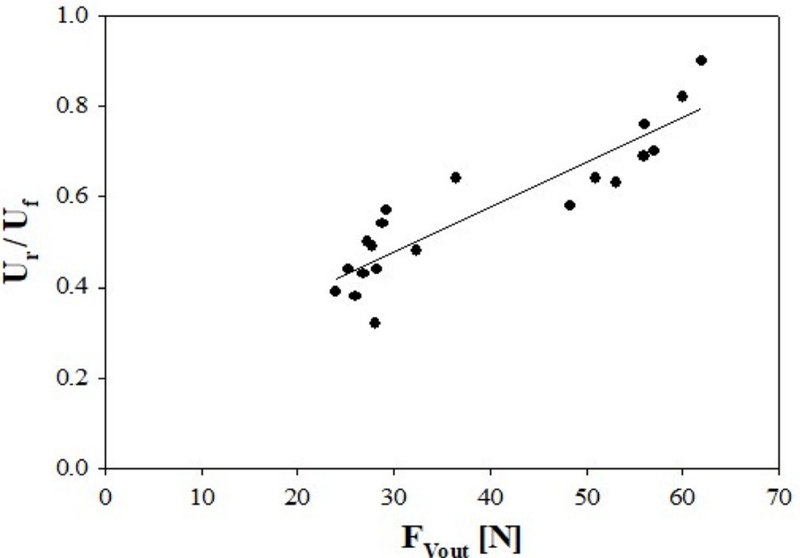
Correlation of FVout [N] in the developed measuring device and Ur/Uf in Cutometer®
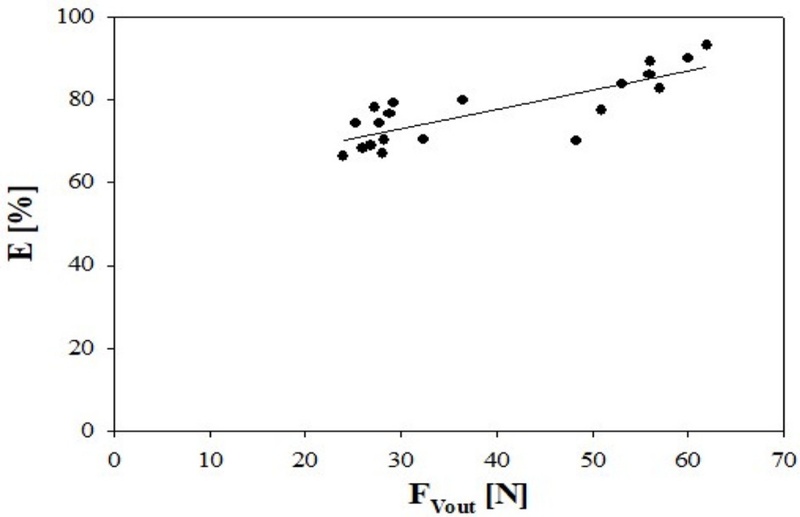
Correlation of FVout [N] in the developed measuring device and E in Dermaflex®
Fig. 15 presents the results of the correlation analysis between the output of the developed device (FVout) and the elasticity index from the Cutometer® (Ur/Uf), which yielded a Spearman’s correlation coefficient of R = 0.891 (p < 0.001). This indicates a strong and statistically significant positive correlation between the two devices. Likewise, as shown in Fig. 16, the correlation between the developed device and the Dermaflex ® (parameter E) produced a Spearman’s coefficient of R = 0.810 (p < 0.001), further demonstrating a high degree of agreement.
Although prior results revealed only slight statistical differences in elasticity values between body sites, the correlation between the developed device and both reference systems was statistically robust. These findings confirm that the developed skin elasticity measurement system is both valid and reliable when compared to industry-standard instruments.
6. DISCUSSION
This study is significant in that it addresses limitations commonly encountered in skin elasticity measurement—particularly those arising from the multilayered structure of the skin and inter-individual variation. By developing and validating a novel indentation-based device, this work aims to reduce measurement errors while offering a reliable, quantitative alternative to existing commercial tools.
The experimental results demonstrated that the developed device showed a strong positive correlation with two widely used commercial instruments—Cutometer® and Dermaflex®—supporting its validity and reliability as a skin elasticity measurement tool. As shown in Fig. 12, repeated measurements at five different body sites across four participants revealed that the arm regions (S4 and S5) exhibited significantly higher instant skin elasticity (ISE) than the face and neck regions (S1–S3). This difference may be attributed to variations in skin thickness, dermal structure, and subcutaneous fat distribution across different body sites [1,3].
7. CONCLUSION
In recent years, there has been growing interest and active research in the development of beauty and medical devices aimed at improving and maintaining skin elasticity to combat skin aging. Although numerous devices have been introduced, accurately verifying their effectiveness requires precise and reliable measurements of skin elasticity.
In this study, we developed a novel, portable skin elasticity measurement device designed to enhance user convenience and portability compared to conventional systems. Existing commercial devices are often unsuitable for mobile or repeated use due to long measurement durations, which can lead to hysteresis effects and inconvenience in clinical environments. To address these limitations, we proposed a portable indentation-based system that incorporates a thin-film piezoelectric pressure sensor. The device allows for quick, repeated, and quantitative measurements across various body sites, with a probe specifically designed to reduce measurement uncertainty caused by the layered structure of the skin. The performance of the piezoelectric pressure sensor was customized and experimentally validated. Comparative experiments were conducted using the developed device and two widely used commercial systems—Cutometer® and Dermaflex®. All three devices demonstrated a similar trend, with skin elasticity measurements slightly decreasing from proximal to distal body sites. To verify the validity and reliability of the developed system, correlation analyses were performed between the proposed device and the two reference devices. The results revealed strong positive correlations, confirming the accuracy and consistency of the developed system. The proposed portable indentation-type device, equipped with a piezoelectric sensor, enabled instantaneous and quantitative skin elasticity measurements that reflect both the biophysical and biomechanical properties of the skin. Therefore, it is expected to be a highly effective tool for assessing the effects of UV exposure, aging, hydration levels, and seasonal changes on skin elasticity. Moreover, it holds strong potential for applications in clinical studies, skincare product development, and broader research on skin health and biomechanics.
Acknowledgments
No external funding was received for this study.
References
-
G. Boyer, L. Laquieze, A. Le Bot, S. Laquieze, H. Zahouani, Dynamic indentation on human skin in vivo: Ageing effects, Skin Res. Technol. 15 (2009) 55–67.
[https://doi.org/10.1111/j.1600-0846.2008.00324.x]

-
A. Vexler, I. Polyansky, R. Gorodetsky, Evaluation of skin viscoelasticity and anisotropy by measurement of speed of shear wave propagation with viscoelasticity skin analyzer, J. Invest. Dermatol. 113 (1999) 732–739.
[https://doi.org/10.1046/j.1523-1747.1999.00751.x]
-
C. Edwards, R. Marks, Evaluation of biomechanical properties of human skin, Clin. Dermatol. 13 (1995) 375–380.
[https://doi.org/10.1016/0738-081X(95)00078-T]
- E.-H. Kim, H.-J, Kim, A Study on the analysis Method of Skin Condition through Visual Confirmation of Skin Surface, J. Converg. Inf. Technol. 11 (2021) 267–275.
-
J.L. Levy, F. Pons, L. Agopian, R. Besson, Subjective Evalusation and Objective Measurement Methods in Cosmetic Dermatology, Med. Laser Appl. 19 (2004) 223–229.
[https://doi.org/10.1078/1615-1615-00146]
-
S. Diridollou, F. Patat, F. Gens, L. Vaillant, D. Black, J. Lagarde, et al., In vivo model of the mechanical properties of the human skin under suction, Skin Res. Technol. 6 (2000) 214–221.
[https://doi.org/10.1034/j.1600-0846.2000.006004214.x]
-
N.T. Clancy, G.E. Nilsson, C.D. Anderson, M.J. Leahy, A new device for assessing changes in skin viscoelasticity using indentation and optical measurement, Skin Res. Technol. 16 (2010) 210–228.
[https://doi.org/10.1111/j.1600-0846.2010.00433.x]
-
N. Krueger, S. Luebberding, M. Oltmer, M. Streker, M. Kerscher, Age-related changes in skin mechanical properties: A quantitative evaluation of 120 female subjects, Skin Res. Technol. 17 (2011) 141–148.
[https://doi.org/10.1111/j.1600-0846.2010.00486.x]
-
Y.P. Huang, Y.P. Zheng, S.F. Leung, A.P.C. Choi, High frequency ultrasound assessment of skin fibrosis: Clinical results, Ultrasound Med. Biol. 33 (2007) 1191–1198.
[https://doi.org/10.1016/j.ultrasmedbio.2007.02.009]
-
S. Diridollou, M. Berson, V. Vabre, An in vivo method for measuring the mechanical properties of the skin using ultrasound, Ultrasound Med. Biol. 24 (1998) 215–224.
[https://doi.org/10.1016/S0301-5629(97)00237-8]
-
M. Gniadecka, J. Serup, Suction chamber method for measuring skin mechanical properties: The Dermaflex®, In: P. Elsner, H.I. Maibach, G. Berardesca, K.-P. Wilhelm (Eds.), Handbook of Non-Invasive Methods and the Skin, 2nd ed., CRC Press, Boca Raton, 2006, pp. 571–577.
[https://doi.org/10.3109/9781420003307-78]
-
K. O’goshi, Suction chamber method for measurement of skin mechanics: The Cutometer®, In: P. Elsner, H.I. Maibach, G. Berardesca, K.-P. Wilhelm (Eds.), Handbook of Non-Invasive Methods and the Skin, 2nd ed., CRC Press, Boca Raton, 2006, pp. 579–582.
[https://doi.org/10.3109/9781420003307-79]
-
J.A. Clark, J.C.Y. Cheng, K.S. Leung, Mechanical properties of normal skin and hypertrophic scars, Burns 22 (1996) 443–446.
[https://doi.org/10.1016/0305-4179(96)00038-1]
-
R. Sanders, Torsional elasticity of human skin in vivo, Pflugers Arch. 342 (1973) 255–260.
[https://doi.org/10.1007/BF00591373]
-
D.B. Abbas, C.V. Lavin, E.J. Fahy, M. Griffin, N. Guardino, M. King, et al., Standardizing Dimensionless Cutometer Prameters to Determine In Vivo Elasticity of Human Skin, Adv. Wound Care 11 (2022) 297–310.
[https://doi.org/10.1089/wound.2021.0082]
-
M. Gniadecka, Effects of ageing on dermal echogenicity, Skin Res. Technol. 7 (2001) 204–207.
[https://doi.org/10.1034/j.1600-0846.2001.70310.x]
-
T. Sugihara, T. Ohura, K. Homman, H.H. Igawa, The extensibility in human skin: variation according to age and site, Br. J. Plast. Surg. 44 (1991) 418–422.
[https://doi.org/10.1016/0007-1226(91)90199-T]
-
P.G. Agache, C. Monneur, J.L. Leveque, J. De Rigal, Mechanical properties and young’s modulus of human skin in vivo, Arch. Dermatol. Res. 269 (1980) 221–232.
[https://doi.org/10.1007/BF00406415]